The earlier exhibition, Freedom and Slavery in the Making of a New Nation, placed the lives of people enslaved in Washington’s presidential household alongside the founding ideals of liberty. Its material addressed daily life, systems of enslavement, escape, archaeology, and remembrance. The surviving April 2010 plan is an unusually useful entry point: it contains sections of the exhibition’s text and design. The archive expressly distinguishes the plan from the final installation, which largely followed it. Independence Hall Association’s exhibit-plan archive.
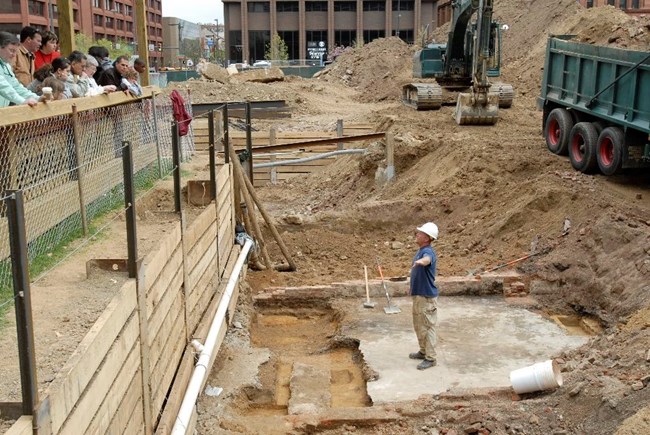
Encounter it: Explore that archive, then read the National Park Service’s current exhibit text. Compare the organization of the narrative: whose actions come first, whose motives receive explanation, and how much space each life receives. This is a comparison between an earlier plan and current published text, not yet a panel-by-panel reconstruction of every physical change.
The original display was removed in January 2026. A February court order required restoration, but that was not the end of the dispute. In July the federal government replaced the exhibition after intervening appellate proceedings. Philadelphia’s mayor opposed the changes and announced an intention to seek rehearing. Our classification is “government removal followed by replacement of historical interpretation; litigation history must be dated.” January reporting, February reporting, City of Philadelphia’s July 15 statement.
It would be inaccurate to say the new text contains no slavery history. The NPS page includes biographies of enslaved household members, while its account of Washington prominently discusses his private reservations about slavery and eventual emancipation provisions. The question is what the replacement emphasizes, qualifies, or reduces. Whether that interpretation is persuasive should be assessed against historical evidence and the earlier presentation. Current NPS text.
The story has also moved into another medium. A Museum Council announcement for September 5, 2026 describes volunteers reading the original panel text aloud and distributing information at the site through Old City Remembers. The announcement establishes that activity was organized; it does not independently document attendance at that particular event. Museum Council announcement.
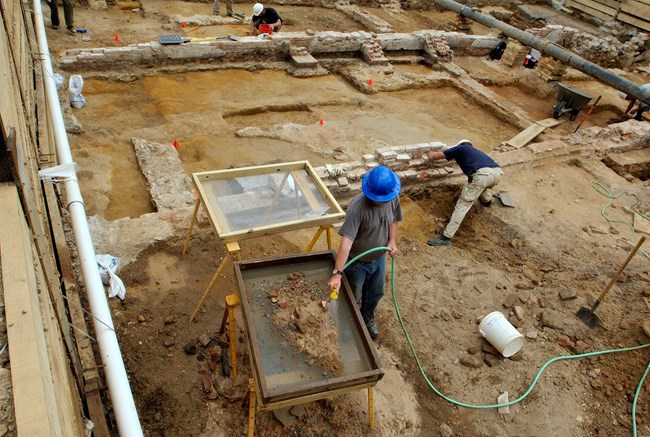
An older connection: Historian Gary Nash’s account documents an earlier struggle over how slavery and the presidential residence would appear in the Liberty Bell area’s interpretation. Public history at this location was contested long before our 2025 starting point. Nash’s account.
What remains to learn: Match dated photographs of the installed original panels to their replacements and verify subsequent court developments. The notebook updates our earlier conversation’s February snapshot; it should not leave readers with the impression that the restoration order settled the case.
A question to carry into the material: What changes when an exhibition is organized around the lives of enslaved people rather than the moral intentions of a president?
Update, September 14, 2026: Our earlier draft stopped at the city’s intention to seek rehearing. Pennsylvania Capital-Star reporting, republished by Keystone Newsroom says the request was denied August 18 and the case continues in District Court. This updates the procedural status; it does not mean the entire dispute is resolved. We have not independently inspected the denial order.
Have a correction, additional evidence, or a response to this story? Write to the editor. Please include the article title and relevant sources.